One of the most common questions homeowners ask before installing a residential elevator is, “How much electricity does a home lift consume?” Many people assume that a home elevator significantly increases electricity bills, but modern lift technology has become far more energy-efficient than ever before.
Today’s residential elevators are designed with advanced motors, intelligent control systems, and power-saving features that keep electricity consumption low while delivering smooth and reliable performance.
In this Home Lift Electricity Consumption guide, Shaheen Elevator explains how much electricity a home lift uses, the factors that affect power consumption, and practical tips to improve energy efficiency.
Does a Home Lift Consume a Lot of Electricity?
The simple answer is No.
Modern residential elevators consume relatively little electricity compared to many household appliances such as air conditioners, water heaters, or electric ovens.
Since home lifts generally travel only a few floors and operate for short periods each day, their overall power consumption remains low.
For most families, the additional electricity cost is minimal.
Average Home Lift Electricity Consumption
The actual electricity usage depends on several factors, including:
- Lift type
- Motor technology
- Number of floors
- Cabin capacity
- Frequency of use
- Load carried
- Drive system
Typical Power Ratings
One of the most common questions homeowners ask before installing a residential elevator is, “How much electricity does a home lift consume?” Many people assume that a home elevator significantly increases electricity bills, but modern lift technology has become far more energy-efficient than ever before.
Today’s residential elevators are designed with advanced motors, intelligent control systems, and power-saving features that keep electricity consumption low while delivering smooth and reliable performance.
In this Home Lift Electricity Consumption guide, Shaheen Elevator explains how much electricity a home lift uses, the factors that affect power consumption, and practical tips to improve energy efficiency.
Does a Home Lift Consume a Lot of Electricity?
The simple answer is No.
Modern residential elevators consume relatively little electricity compared to many household appliances such as air conditioners, water heaters, or electric ovens.
Since home lifts generally travel only a few floors and operate for short periods each day, their overall power consumption remains low.
For most families, the additional electricity cost is minimal.
Average Home Lift Electricity Consumption
The actual electricity usage depends on several factors, including:
- Lift type
- Motor technology
- Number of floors
- Cabin capacity
- Frequency of use
- Load carried
- Drive system
Typical Power Ratings
| Lift Type | Approximate Motor Power |
|---|---|
| Compact Home Lift | 1 – 2 kW |
| Hydraulic Home Lift | 2 – 5 kW |
| MRL Home Lift | 1.5 – 3 kW |
| Gearless Traction Lift | 1 – 2.5 kW |
Because the lift motor runs only while the elevator is moving, total daily electricity usage is generally much lower than the motor’s rated power.
Factors That Affect Electricity Consumption
1. Lift Technology
Different lift systems consume different amounts of electricity.
Machine Room Less (MRL) Lift
MRL lifts are among the most energy-efficient residential elevators.
Benefits include:
- Low power consumption
- Efficient motor
- Regenerative technology (in some models)
- Reduced standby power
Hydraulic Home Lift
Hydraulic lifts provide smooth operation but generally consume slightly more electricity during upward travel.
However, they remain an excellent option for low-rise residential buildings.
Gearless Traction Lift
Gearless traction elevators use advanced permanent magnet motors that offer:
- Higher efficiency
- Lower electricity consumption
- Quiet operation
- Longer service life
2. Number of Floors
The greater the travel distance, the more electricity is required.
A lift serving two floors naturally consumes less energy than one operating across four or five levels.
3. Frequency of Use
Electricity usage depends on how often the lift is used.
Typical residential usage includes:
- Morning trips
- Evening use
- Carrying groceries
- Moving luggage
- Elderly family members
Since home lifts are not used continuously like commercial elevators, power consumption remains relatively low.
4. Lift Capacity
Larger cabins require more powerful motors.
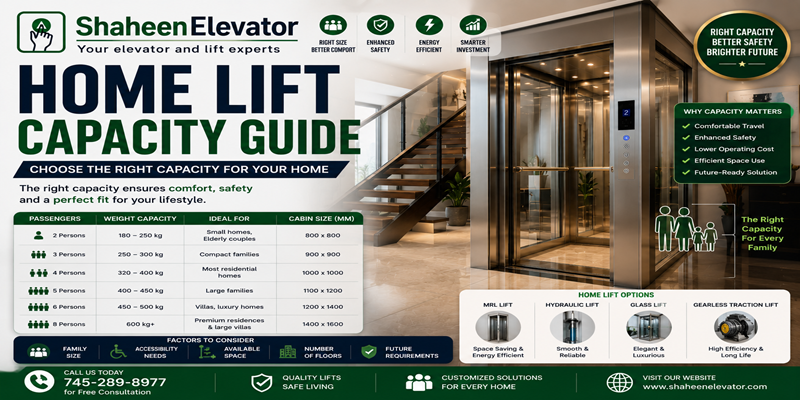
Residential capacities typically include:
- 2 Persons
- 4 Persons
- 6 Persons
- 8 Persons
Choosing the correct lift size prevents unnecessary energy consumption.
5. Standby Power
Even when not moving, some lift components remain active.
These may include:
- Cabin lighting
- Control system
- Display panel
- Emergency battery charging
Modern elevators use LED lighting and energy-saving standby modes to minimize idle power consumption.
Energy-Saving Features in Modern Home Lifts
Today’s residential elevators include advanced technologies that improve efficiency.
LED Cabin Lighting
Consumes less electricity while providing bright illumination.
Automatic Standby Mode
Turns off unnecessary systems when the lift is idle.
Gearless Motor Technology
Provides higher efficiency than traditional geared motors.
Variable Frequency Drive (VFD)
Ensures smooth acceleration and reduces power consumption during operation.
Regenerative Drive (Available in Premium Models)
Converts braking energy into usable electrical energy, reducing overall electricity usage.
Tips to Reduce Home Lift Electricity Consumption
You can further improve efficiency by following these simple practices.
Choose an Energy-Efficient Lift
Modern MRL and gearless traction lifts are excellent choices for reducing electricity usage.
Avoid Overloading
Operating within the recommended weight limit helps the motor perform efficiently.
Schedule Regular Maintenance
Routine servicing keeps:
- Motor efficiency high
- Guide rails lubricated
- Doors aligned
- Control systems functioning correctly
Well-maintained elevators consume less energy.
Use LED Lighting
LED cabin lights consume much less power than conventional lighting.
Turn Off Decorative Lighting
If your lift has decorative lighting or display features, use energy-saving settings whenever possible.
Is a Home Lift More Efficient Than Other Household Appliances?
In many cases, yes.
While appliances such as air conditioners, electric geysers, ovens, and induction cooktops may operate for hours, a home lift usually runs for only a few minutes each day.
As a result, the total monthly electricity consumption of a residential elevator is often surprisingly low.
Safety and Energy Efficiency
Energy-efficient elevators should never compromise safety.
Essential safety features include:
- Automatic Rescue Device (ARD)
- Battery Backup
- Door Interlock
- Emergency Alarm
- Auto Leveling
- Overload Protection
- Emergency Stop Button
- Intelligent Safety Sensors
Modern elevators combine low energy consumption with maximum passenger protection.
Maintenance for Better Energy Efficiency
Routine maintenance helps reduce electricity consumption.
Professional servicing includes:
- Motor inspection
- Brake adjustment
- Guide rail lubrication
- Electrical inspection
- Door alignment
- Battery testing
- Control system diagnostics
An Annual Maintenance Contract (AMC) helps maintain peak efficiency while preventing unexpected breakdowns.
Why Choose Shaheen Elevator?
Shaheen Elevator provides energy-efficient residential elevator solutions designed for modern homes.
Our Services
- Home Lift Installation
- Energy-Efficient Residential Elevators
- Machine Room Less (MRL) Lifts
- Hydraulic Home Lifts
- Glass Elevators
- Gearless Traction Lifts
- Lift Modernization
- Lift Repair
- Annual Maintenance Contracts (AMC)
- Emergency Support
Why Homeowners Choose Shaheen Elevator
- Energy-efficient lift technology
- Premium-quality components
- Customized residential solutions
- Advanced safety features
- Professional installation
- Affordable pricing
- Reliable after-sales support
- Experienced service engineers
Our elevators are designed to provide maximum comfort with minimal energy consumption.
Frequently Asked Questions (FAQs)
Does a home lift increase the electricity bill significantly?
No. Modern residential elevators consume relatively little electricity because they operate only for short durations and use energy-efficient motors and control systems.
Which home lift is the most energy-efficient?
Machine Room Less (MRL) lifts and gearless traction lifts are among the most energy-efficient residential elevator options available today.
Does lift capacity affect electricity consumption?
Yes. Larger cabins require more powerful motors, so selecting the appropriate lift capacity helps optimize energy usage.
Can regular maintenance reduce electricity consumption?
Absolutely. Proper maintenance keeps the motor, guide rails, doors, and control systems operating efficiently, which can reduce unnecessary power consumption.
Are modern home lifts eco-friendly?
Yes. Many modern home lifts include LED lighting, standby modes, VFD technology, and regenerative drives that help lower electricity consumption and reduce environmental impact.
Conclusion
Understanding Home Lift Electricity Consumption helps homeowners make informed decisions when choosing a residential elevator. Modern home lifts are designed to deliver outstanding performance while using minimal electricity, making them an economical and environmentally friendly addition to any home. Factors such as lift technology, motor efficiency, usage frequency, and regular maintenance all contribute to lower power consumption and reduced operating costs.
Shaheen Elevator is committed to providing advanced, energy-efficient home lift solutions that combine innovation, safety, and affordability. From compact MRL lifts and hydraulic systems to premium gearless elevators, our expert team offers customized solutions tailored to your home’s needs. With professional installation, preventive maintenance, and dependable after-sales support, Shaheen Elevator ensures you enjoy a safe, comfortable, and energy-efficient residential elevator for years to come.